

There’s a line from AC/DC’s It’s a Long Way to the Top (If You Wanna Rock ’n’ Roll) that has probably followed every touring band around the world for the last fifty years:
“If you think it’s easy doing one night stands, try playing in a rock ’n’ roll band.”
What’s interesting about that lyric is how little it has aged. If anything, it feels even more relevant now than it did in 1975.
The technology around music has changed completely, the ways artists release songs have evolved, and audiences consume music in fundamentally different ways, yet the core reality behind that line still remains untouched. Building a life around music is difficult, exhausting, financially unstable, and emotionally demanding in ways most people outside of it rarely fully see.
The strange thing about the current moment is that music exists in this constant contradiction. On one side, artists have more tools available to them than ever before. Someone can upload a song from their bedroom in Adelaide, Melbourne, or Perth and potentially have listeners from completely different parts of the world hearing it within hours.
There are fewer gatekeepers than there once were, and discovery itself has become far more democratic than the industry structures that existed twenty or thirty years ago.
At the same time though, actually sustaining a long-term career in music feels increasingly difficult, especially for artists who are trying to build something with depth and identity rather than simply reacting to trends.
This tension feels particularly visible in Australia right now. From the outside, the country still appears to have a thriving live music culture. Tours happen constantly, festivals continue to sell out, and there is never really a shortage of new artists emerging from different scenes around the country.
But underneath all of that, there has also been a growing sense of exhaustion across the industry over the last few years. Touring costs continue rising, smaller venues are disappearing, audiences are more fragmented than they once were, and artists are increasingly expected to function not only as musicians, but also as marketers, content creators, strategists, editors, and personalities online.
For bands especially, the pressure feels uniquely heavy because maintaining a band has always required a level of commitment that goes beyond the music itself.
It is multiple people trying to keep momentum moving in the same direction while balancing completely different personal lives, financial realities, emotional states, and long-term priorities. Even under ideal circumstances, that is difficult to sustain over a long enough period of time.
Which is partly why the indefinite hiatus of Bad//Dreems feels larger than simply another band deciding to step away for a while.
A Band That Always Felt Grounded in Something Real
Bad//Dreems were never just another band filling out festival lineups. Over the last decade, they became one of the defining voices in modern Australian pub rock, not because they reinvented the genre completely, but because they understood what made it resonate in the first place.
Their music always felt grounded in something recognisable. There was humour in it, frustration in it, loneliness in it, and an understanding of suburban Australian life that never felt exaggerated or performative.
That honesty is what made albums like Dogs At Bay, Gutful, and HOO HA! connect with so many people over the years.
The band understood how to capture a very particular emotional texture within Australian life — the boredom, the distance, the dark humour people use to mask disappointment, and the feeling of wanting more while simultaneously feeling stuck in place. But underneath that was often something uglier as well: violence, repression, toxic masculinity, racism, generational frustration, and the emotional damage sitting quietly beneath a lot of Australian suburbia. Even at their loudest, there was always vulnerability underneath the surface of their music.
What made Bad//Dreems particularly important within the Australian landscape was that their songs were not trying to mythologise themselves into something larger than life. They felt closer to conversations overheard outside pubs at closing time, long drives through outer suburbs, or the strange emotional emptiness that can exist even inside loud rooms full of people.
That ability to capture ordinary life without romanticising or mocking it is much harder than it sounds, and it is also part of why the band’s music has aged so well.
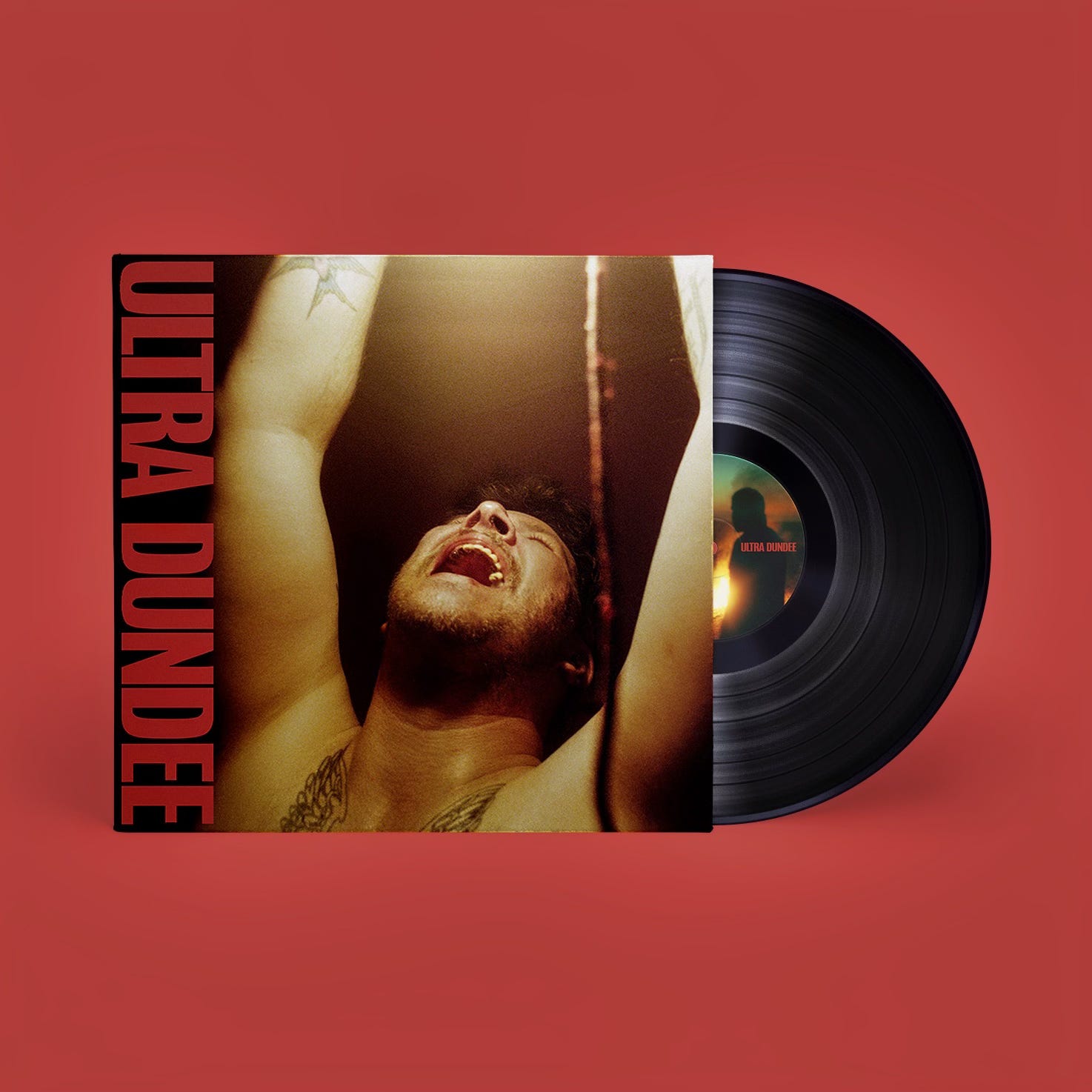
Ultra Dundee Feels Like the End of a Circle
Listening to Ultra Dundee now, especially with the knowledge of the hiatus sitting quietly in the background, the emotional weight of the record becomes even more noticeable.
It almost feels like a circle being completed.
Before this album, Dogs At Bay probably felt like the Bad//Dreems record most deeply tied to Adelaide, not just geographically, but emotionally as well.
There was something about that album that captured the feeling of outer suburbs, pub carparks, dead-end jobs, strange local characters, and the kind of restless boredom that quietly sits underneath a lot of Australian life. More than anything, it introduced the emotional world the band would continue returning to over the next 15 years.
Now with Ultra Dundee, the band somehow returns to that same emotional landscape, except this time it feels older, stranger, heavier, and more reflective. There’s still humour throughout the album, still absurdity, still the surreal Australian imagery Bad//Dreems have always been brilliant at writing, but underneath it all there’s also a sense of reckoning with time, identity, memory, mortality, and place.
Even the opening track, “Slaughterhouse ’85”, immediately feels like someone revisiting fragments of their past while trying to understand what any of it actually meant. The song moves through Adelaide imagery almost like memories flashing past a car window — the Q.E.H., Croatian clubs, late-night drives, local fuel stations, knife fights, old ghosts — but none of it feels nostalgic in the traditional sense.
It feels more like someone emotionally tracing the map of where they came from while quietly realising how much time has already disappeared.
Throughout Ultra Dundee, people seem spiritually displaced from themselves, from each other, and sometimes even from the country surrounding them. Characters drift through deserts, pubs, highways, shadowlands, religious hallucinations, collapsing relationships, and strange visions of Australia that feel simultaneously grounded and mythological.
“Shadowland” might be one of the clearest examples of this thread running through the album. The repeated line, “I wake up every morning and forget myself / And the man in the mirror looks like someone else,” feels less like a personal confession and more like the emotional centre of the entire record. The album constantly returns to questions of identity, disconnection, and the uneasy feeling of no longer fully recognising the world around you.
What makes the album compelling is that Bad//Dreems never try to over-explain any of this. The songs feel intentionally fragmented at times, almost dreamlike in the way imagery appears and disappears. Characters emerge briefly before dissolving again. Places feel symbolic as much as physical. Religious references sit beside UFO sightings, highways, pubs, violence, death, and desert landscapes in ways that make Australia itself feel almost mythological and haunted.
That has always been one of Bad//Dreems’ greatest strengths as writers.
Their music rarely presents Australia in simplistic terms. There’s always beauty sitting beside ugliness, humour sitting beside violence, spirituality sitting beside emptiness. Their version of Australia feels deeply human because it allows contradictions to exist naturally rather than forcing neat conclusions.
Knowing the hiatus sits ahead of this album inevitably changes how certain lyrics and themes are interpreted. Songs about time, endings, memory, isolation, and transformation begin carrying extra emotional weight even if they were never written explicitly about the band itself.
The closing track “Afterlife” in particular almost feels like a quiet acceptance of change rather than a dramatic farewell.
What makes Ultra Dundee such a strong final statement (if it does end up becoming that) is that it feels like a band fully settling into themselves creatively and emotionally, trusting atmosphere and honesty more than anything else.
Which, in a strange way, is probably what made Bad//Dreems important in the first place.
The Bigger Problem Facing Australian Music
The difficult reality is that longevity itself has become harder to sustain. Many artists today are operating inside systems where the emotional, financial, and physical demands of maintaining a creative career continue growing while the actual rewards become increasingly unstable.
Touring, which was once one of the few reliable ways for artists to survive financially, has become significantly more expensive, while streaming rarely provides enough meaningful income unless artists reach enormous scale.
At the same time, audiences are consuming more music than ever before, but often in ways that encourage speed rather than deep engagement. Songs move quickly through timelines, playlists refresh constantly, and attention itself has become fragmented across platforms. Within that environment, building something slowly and organically becomes much harder, even for genuinely great artists.
For bands, these pressures often become even more intense because sustaining a group over a long period requires far more than simply continuing to write good songs.
That reality rarely gets discussed properly when conversations around music become overly focused on numbers, visibility, and momentum.
Because the truth is that many important artists are barely surviving long before audiences realise there is even a problem.
What Needs to Change?
This is why conversations around supporting music need to move beyond simply celebrating artists once they are already struggling or disappearing.
If independent music scenes are going to survive long-term, then the ecosystems around artists also need to become sustainable. Smaller venues matter because they give artists places to develop before larger audiences arrive. Independent media matters because scenes cannot survive purely through algorithms.
Audiences showing up consistently matters because music cultures are built through communities, not passive consumption.
There also needs to be a wider cultural shift in how audiences understand success within music. Not every artist is going to become globally massive, and honestly, that should not be the expectation in the first place.
Some of the most important bands within any country’s music culture are the ones that slowly build dedicated communities over years rather than exploding overnight.
But for that kind of artistic growth to survive, there needs to be enough structural support around it to make longevity possible.
Australia is still producing incredible bands. That has never really been the problem. The deeper issue is whether the structures surrounding artists actually allow them to keep creating long enough to fully evolve.
And maybe that is the uncomfortable feeling sitting underneath the hiatus of Bad//Dreems.
Not that a great band reached the end of its creative abilities, but that even for respected, culturally important artists, surviving within the modern music industry can slowly become harder than making the music itself.