

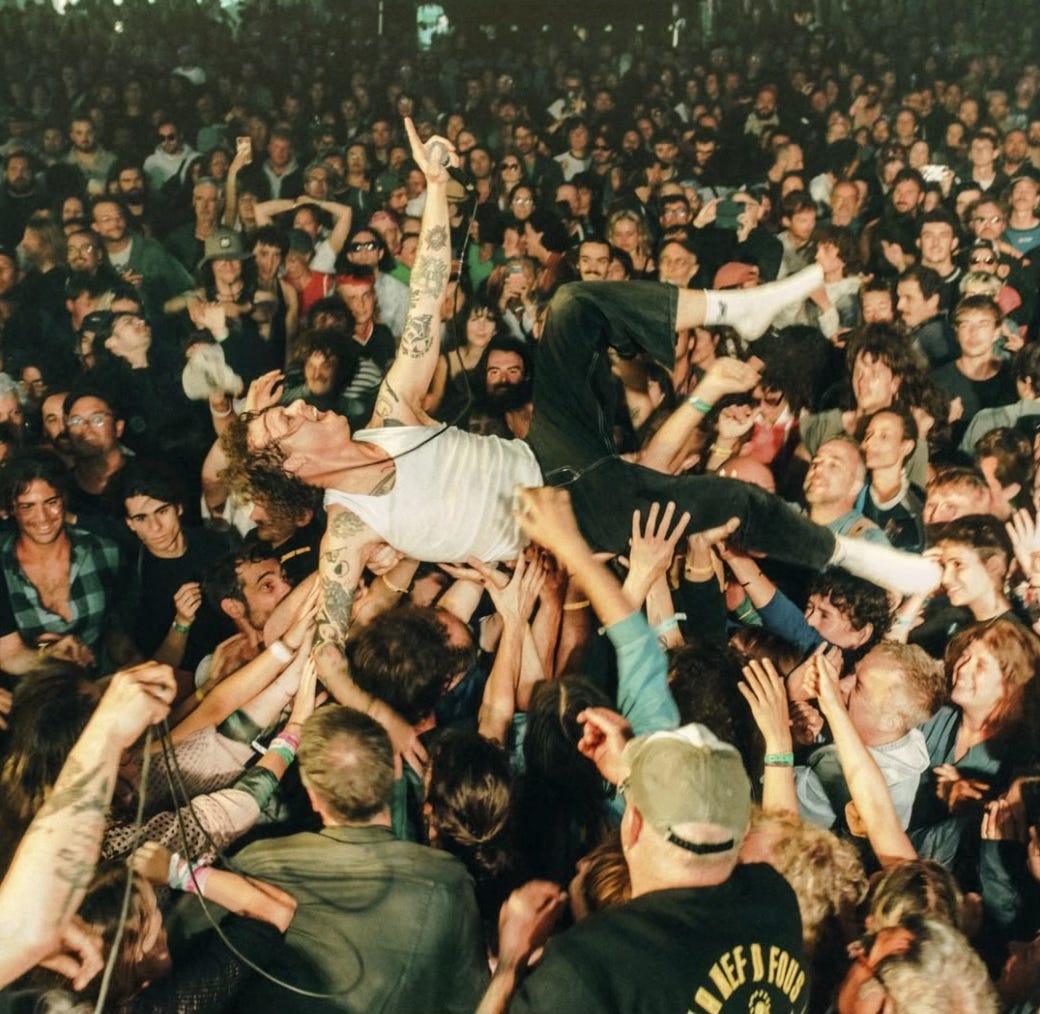
A lot of artists today jump from one band wagon to another depending on what is hot, just to seem like they care about things and get more followers along the way.
In a day and age where being seen and heard everywhere is what most musicians and bands are looking to get, there we have the Australian band Dr Sure’s Unusual Practice, the baby of frontman Dougal Shaw, who is not only standing up for what he believes in, but has shown that through actions again and again since the inception of the band in 2019.
Not too long ago in February 2026, all of their music was taken down from streaming platforms.
At a time where most artists are trying to get onto as many playlists as possible and constantly stay visible online, the move felt almost bizarre.
But the reasoning behind it was surprisingly simple. Shaw spoke about wanting to be more intentional with where the band’s music exists and what systems it supports. He talked about growing uncomfortable participating in platforms that reduce art into endlessly available content while artists themselves are expected to constantly feed algorithms just to survive.
Importantly, the decision was not framed as some dramatic moral statement. There was no “we are better than everyone else” energy around it. If anything, it felt more like somebody openly questioning the systems musicians have slowly accepted as normal over the last decade.
And the more you think about it, the harder it becomes to ignore how strange music culture has started to feel recently.
The music itself feels like a reaction to modern life
Part of what makes Dr Sure’s Unusual Practice so interesting in the middle of this whole conversation is that their music already sounds like it is reacting to the exact world that created AI music culture in the first place.
Their records are chaotic, funny, anxious, political and weirdly emotional all at once. Across their discography, the band jumps between post-punk, synth punk, art rock and new wave while constantly pulling apart modern Australian life in the process.
A lot of the band’s writing revolves around modern alienation, housing, capitalism, burnout, identity and the weird disconnect that comes from existing online all the time. There is frustration running through the music, but there is also humour and warmth sitting underneath it.
It never sounds like the band is trying to position themselves above everybody else or pretend they have everything figured out. If anything, the songs feel like people trying to make sense of the mess in real time.
That messiness is exactly what feels important now.
Because the more AI-generated music starts appearing online, the more noticeable it becomes when music actually sounds lived-in. AI can already imitate genres, structures and aesthetics pretty convincingly, but it still struggles to recreate the feeling of actual people bouncing off each other creatively. The strange chemistry that happens inside bands. The moments that probably should not work but somehow become the most memorable parts of a record.
Bands like Dr Sure’s Unusual Practice sound deeply personal because their music is full of tension, contradictions and unpredictability. Nothing about it feels designed purely for algorithms or passive listening.
Which is probably why their decision to pull their music from streaming platforms felt so connected to the art itself. The band has always sounded like they were questioning the systems surrounding modern life. Eventually that questioning moved beyond the lyrics and into real actions too.
Music discovery does not feel the same anymore
There was a time where finding a new band genuinely felt exciting. You would hear about artists through friends, zines, forums, community radio stations, opening acts at tiny gigs, or some badly recorded live video uploaded online years ago. Music discovery felt messy and personal.
People also listened differently, Albums were something you sat with properly. You learned tracklists, lyrics, artwork, weird transitions between songs, hidden details buried deep inside records. Sometimes albums took weeks or months to fully click, but that was part of the experience.
Now music often feels like it is designed to pass by as quickly as possible.
Streaming completely changed listening habits. Songs became shorter, hooks arrived quicker, and artists suddenly had to compete for attention every second. Instead of disappearing for two or three years to make a concept album, musicians are now expected to constantly release content just to remain visible.
Even the way people talk about music has changed, everything revolves around numbers now. Monthly listeners, streams, engagement, algorithm placement. The conversation around art increasingly feels tied to performance metrics rather than actual connection.
Music has become more accessible than ever before, yet somehow a lot of it feels less meaningful.
Album culture has not disappeared completely, but it definitely feels weaker than it once did. Fewer people seem to sit with records long enough to build relationships with them. Discovery feels less organic now, like music is being delivered to people rather than stumbled upon.
Then AI entered the conversation and pushed all of this even further.
But acting like AI is purely evil misses the point too
At the same time, reducing AI to some evil force destroying creativity feels far too simplistic. Music history is full of moments where new technology scared people. Synthesisers were criticised, Sampling was dismissed as stealing. Digital recording was blamed for ruining warmth and authenticity, but eventually artists found ways to use those tools creatively.
AI can absolutely become part of that evolution if it is used carefully.
For independent musicians especially, AI tools can remove barriers that previously made creating art far more difficult. Artists can use it to organise ideas, restore recordings, experiment with arrangements, create visuals, or speed up technical processes that would otherwise require money and resources they simply do not have.
The problem is not the technology itself, it is the culture surrounding it and more importantly how people and corporations are using it.
Right now most platforms reward speed, volume, and visibility over depth. AI is often being used to flood the internet with more disposable content rather than helping artists create more meaningful work. Instead of supporting creativity, it risks flattening music even further into background noise.
So where does music go from here?
That is what makes Dr Sure’s Unusual Practice removing their music from streaming platforms feel bigger than just one band making a personal choice.
Whether intentionally or not, it pushes back against this growing idea that music should always be instantly available, endlessly consumable, and constantly optimised for algorithms.
Maybe the answer is not rejecting technology entirely because realistically that is never going to happen. AI is here now and it will inevitably become part of music culture moving forward. But there is still a huge difference between using technology as a creative tool and allowing it to completely replace the personal side of art.
Because despite everything, people still crave that connection from music. You still see it when local scenes thrive, when genuinely great albums slowly build cult followings, or when songs become attached to specific moments in people’s lives for years afterward.
Maybe that is the thing worth protecting most. Not nostalgia for older ways of consuming music, but the idea that art should still feel connected to real people saying real things, rather than endless content generated to fill silence.