

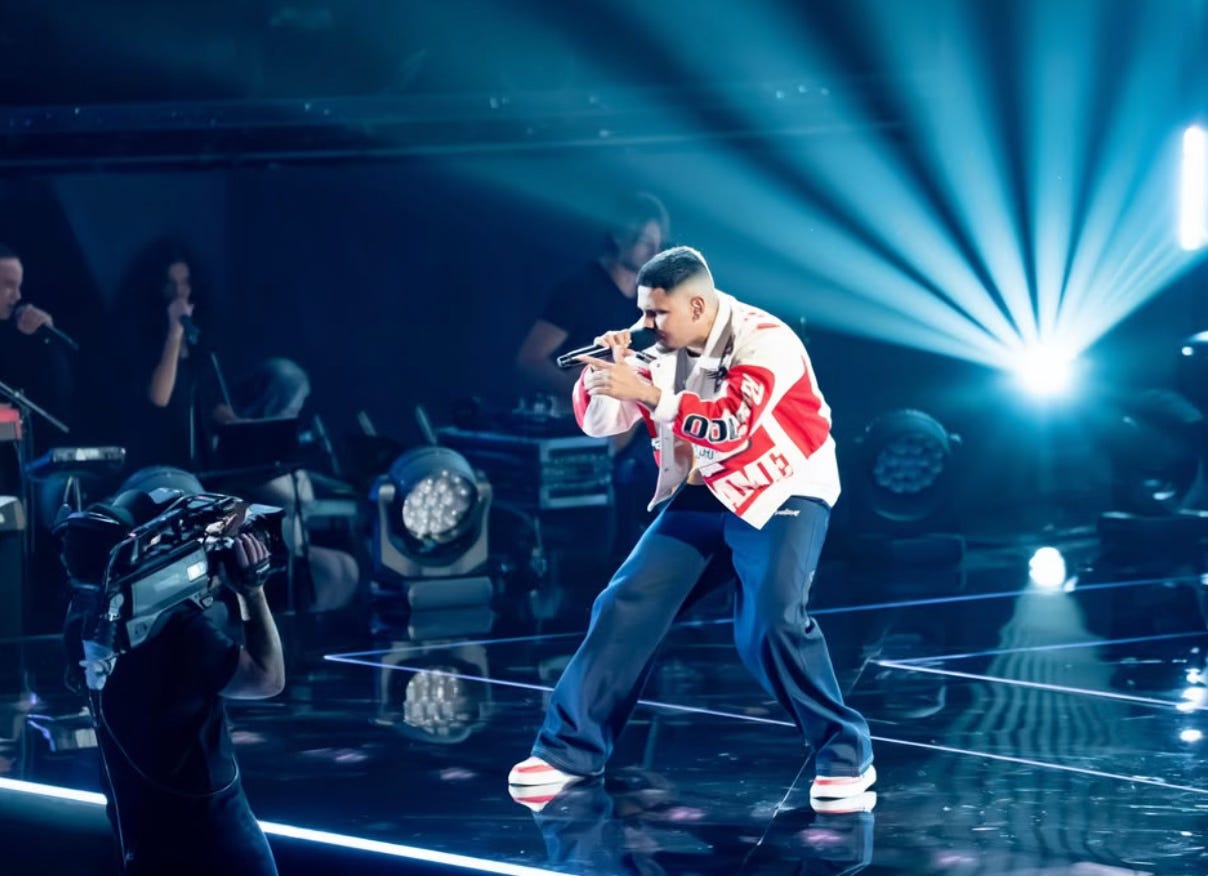
The Darwin rapper’s historic victory was about more than winning a television competition. From performing his brother’s song to bringing his family and community onto the national stage, he made sure Australia heard the stories that mattered to him.
On Sunday night, 22-year-old rapper Yung Milla made history by becoming the first Indigenous artist and the first rapper to win The Voice Australia.
The Marranunggu artist from Darwin, whose real name is Levi Nichaloff, was crowned the winner of the 2026 season after being mentored by former Spice Girl Melanie C, taking home $100,000 and a recording and development package.
It is a pretty remarkable achievement for a young artist who came into the competition wanting to share his music and represent the people and community he comes from. And while winning a show like The Voice is obviously a huge moment for any emerging musician, what makes Yung Milla’s victory particularly interesting is the journey that led him there.
If you have watched these competitions over the years, you would know that they generally favour singers with powerful voices, impressive vocal ranges and the ability to deliver those big moments that get everyone out of their seats.
Yung Milla came in as a rapper, and throughout the competition, he continued to approach music the way he always had, using it to tell stories about his life, his family and the experiences that shaped him.
He didn’t have to move away from hip-hop to win a mainstream singing competition, and I think that is one of the most interesting things about his victory.
His coach Melanie C also acknowledged how his journey had challenged the conventional understanding of what The Voice represents, recognising that having a voice isn’t necessarily limited to how well someone can sing, but also how powerfully they can use it.
And when you look back at the performances that brought Yung Milla to the grand final, you begin to understand why that distinction matters.
He brought his family and community along for the journey
To understand Yung Milla’s journey, you have to go back to his blind audition, where he made a decision that probably tells you more about him than any introduction could have.
Instead of performing a familiar hit or choosing something that would immediately appeal to the coaches, he decided to perform “All My Life”, a song by his older brother, J-MILLA.
His brother had played an important role in his musical development, and now that Yung Milla had an opportunity to perform in front of a national audience, he wanted to use that moment to share his brother’s music.
All four coaches turned their chairs during the performance, and J-MILLA was eventually invited onto the stage to perform alongside him.
It was a beautiful moment between two brothers, but looking back at it now, it also established something that would remain consistent throughout Yung Milla’s time on the show. He wasn’t interested in making the experience entirely about himself. Whenever he had the opportunity, he found ways to bring the people who mattered to him into it.
That became even more apparent during the semi-final, when he performed his own interpretation of Men at Work’s “Down Under”.
Now, “Down Under” is one of those songs that almost everyone in the world associated with Australia. It has been played at sporting events, celebrations and just about every occasion where people want to express a sense of Australian identity.
But Yung Milla approached it from a completely different perspective.
He incorporated his own rap verses, didgeridoo and a choir, using the familiar composition to tell stories about his upbringing, his family and the experiences that shaped him. His mother also joined him on stage towards the end of the performance.
And I think this was one of the most interesting moments of his entire journey.
Here was a young Aboriginal rapper taking one of Australia’s most recognisable songs and using it to tell a story about his own Australia. The one he grew up in, the people who raised him and the experiences that shaped his understanding of home.
It reminded me of what I love about hip-hop in the first place. Artists have been taking existing compositions, reinterpreting them and using them to communicate entirely different experiences for decades.
Yung Milla didn’t need to completely change “Down Under” to make it his own. He brought his own perspective into it, and by the time his mother appeared on stage, the performance had become as much about his family and community as it was about the music.
Then came the grand final, where he chose to perform Tupac’s “Changes”.
For anyone familiar with Tupac’s music, “Changes” is one of those records that has remained relevant long after its release because of the social issues it addresses. It explores racism, inequality, poverty and the struggles faced by communities, while questioning why meaningful change can be so difficult to achieve.
Yung Milla has spoken about how the song represents what he stands for, and knowing a little about his life outside music makes that decision particularly meaningful.
Alongside his work as an artist, he has been involved in mentoring and supporting young Aboriginal people in the Northern Territory, including young people involved in the youth justice system. He has spoken about wanting to become the kind of person he needed when he was younger.
So when he chose to perform “Changes” on one of the biggest stages of his career, it felt like a natural continuation of everything he had been sharing throughout the competition.
What this victory means for First Nations music
Yung Milla’s victory is a historic moment for The Voice Australia, but it is also worth looking at what happened across the competition more broadly.
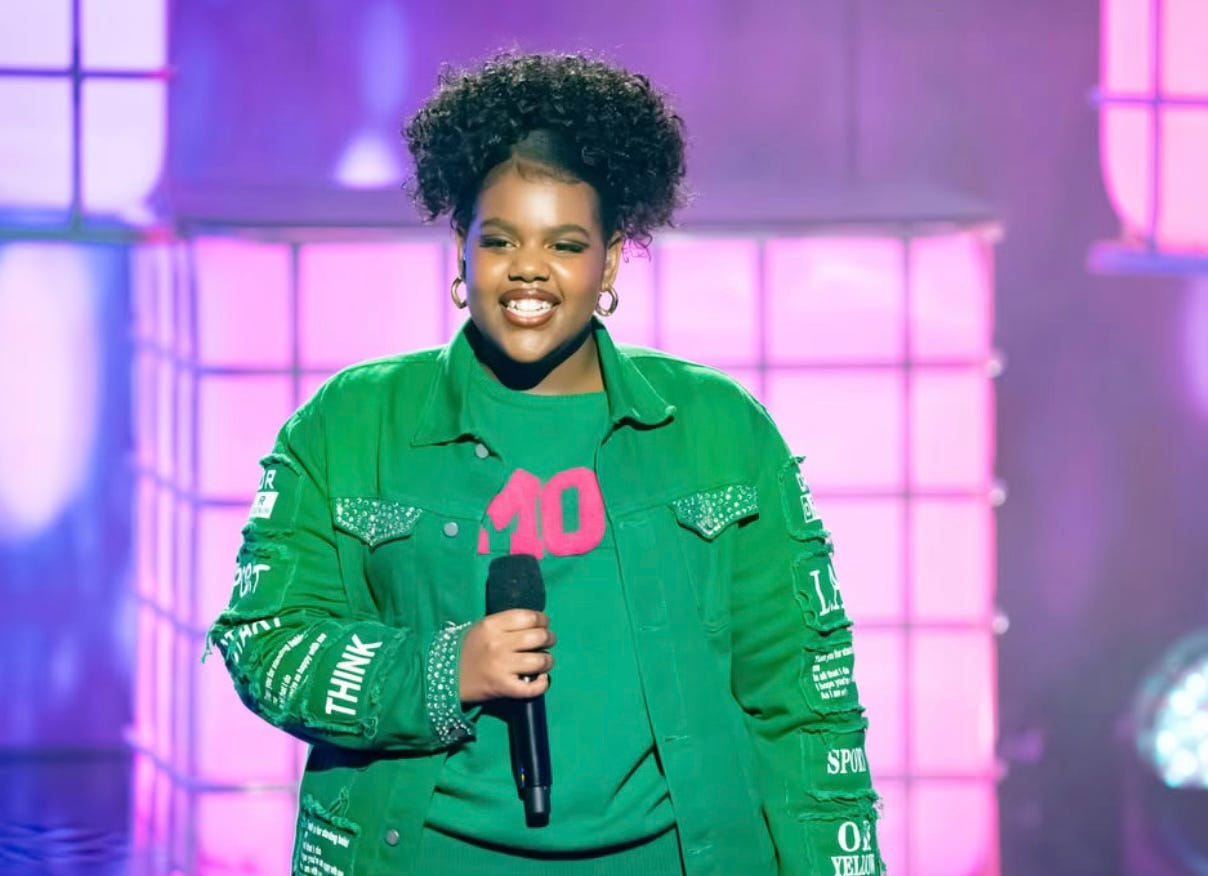
He wasn’t the only First Nations artist to reach the grand final this year. Fifteen-year-old Torres Strait Islander singer Daisha Auda, from Logan in Queensland, also made it to the final four after an impressive journey that included her performance of Andra Day’s “Rise Up” in the semi-final.
Daisha had previously been eliminated before receiving another opportunity in the competition, eventually making it all the way to the grand final while continuing her Year 11 studies.
Having two First Nations artists reach the final, with one ultimately winning the competition, is something worth recognising, particularly considering the national audience a show like The Voice attracts.
But I also think it is important that we don’t look at Yung Milla’s victory as though First Nations music has suddenly arrived in the Australian mainstream.
Artists such as Archie Roach, Yothu Yindi, Briggs and Baker Boy, alongside countless others, have been making important contributions to Australian music for generations. Their work has helped shape the country’s musical identity while telling stories about culture, community, history and experiences that haven’t always received the attention they deserve.
And beyond the artists who have achieved national recognition, there are incredible musicians across regional and remote communities who continue creating music and developing their own sounds.
Yung Milla’s victory adds another chapter to that history, but what makes it particularly valuable is the opportunity it creates for people to discover music they might not otherwise have encountered.
Someone who watched The Voice and connected with his performances might now go and listen to his original music, discover his brother J-MILLA or begin exploring the wider hip-hop scene coming out of the Northern Territory.
And that is something I would love to see happen more often.
Because while mainstream exposure can introduce an artist to a much larger audience, it can also become an introduction to the musical community that helped shape them.
Yung Milla has been open about wanting to use his music and the opportunities available to him to support younger generations. Now, with the prize money, recording resources and national attention that come with winning The Voice, he has an opportunity to continue building on the work he was already doing before the competition.
Of course, winning a television show doesn’t automatically translate into a lasting music career, and it will be interesting to see how he develops as an artist from here.